
Artificial intelligence is becoming more common in everyday life, but its outputs are not fully trusted
As many as 58 per cent of consumers already use artificial intelligence in their daily lives, particularly in leisure time and for information searches. Although it is easy to use, information produced by AI is treated with caution and checked against other sources, according to a consumer survey commissioned by Traficom.
According to a consumer survey commissioned by the Finnish Transport and Communications Agency Traficom, more than half of consumers use AI applications. They are used especially in leisure time and to support learning, but at the same time the reliability of the information they produce raises doubts.
“The use of AI has increased, but trust in the information it produces is developing more slowly. It is therefore important that users understand how AI works and what the information it produces is based on. Traficom coordinates the implementation of the EU Artificial Intelligence Act in Finland and supports the conditions for the safe and trustworthy use of AI,” says Director Jenni Koskinen.
Use of AI applications has increased
A total of 56 per cent of consumers have used freely available AI applications, and 22 per cent have used solutions designed for a specific purpose. Altogether, 58 per cent of consumers have used at least one of these. Among young people aged 18–24, as many as 80 per cent use AI, while among those aged 65–79 the share of users is around one third.
The most commonly used application is ChatGPT, which has been used by 48 per cent of consumers. The use of other applications is clearly lower; for example, Google’s Gemini is used by 19 per cent of consumers and Microsoft’s Copilot by 15 per cent.
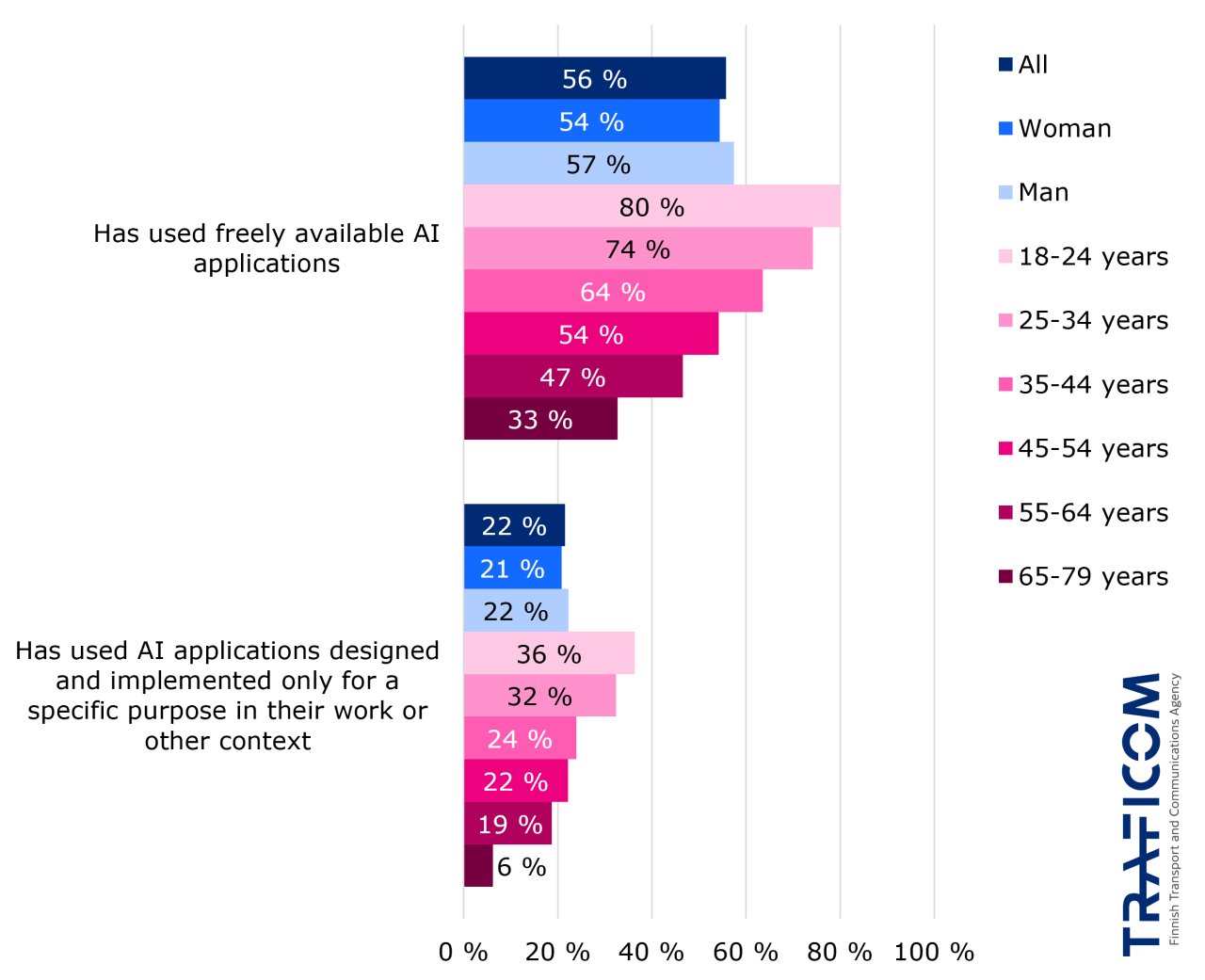
Figure 1. 56% of consumers have used freely available AI applications, and 22% have used an AI solution designed and implemented for a specific purpose in their work or in another context.
Use is focused on leisure time and learning
AI is most commonly used for leisure activities, such as hobbies, with 38 per cent of consumers making use of it for these purposes. A total of 21 per cent use AI at work and 16 per cent in their studies.
Based on Traficom’s consumer survey, the most common uses of AI among consumers in Finland are supporting learning, entertainment and generating ideas. A US study found that AI is increasingly being used for purposes such as therapy, personal development and improving productivity, rather than for technical tasks. Only nine per cent of consumers in Finland have used AI as a conversational partner or for companionship, which was the most common use case in the US study.
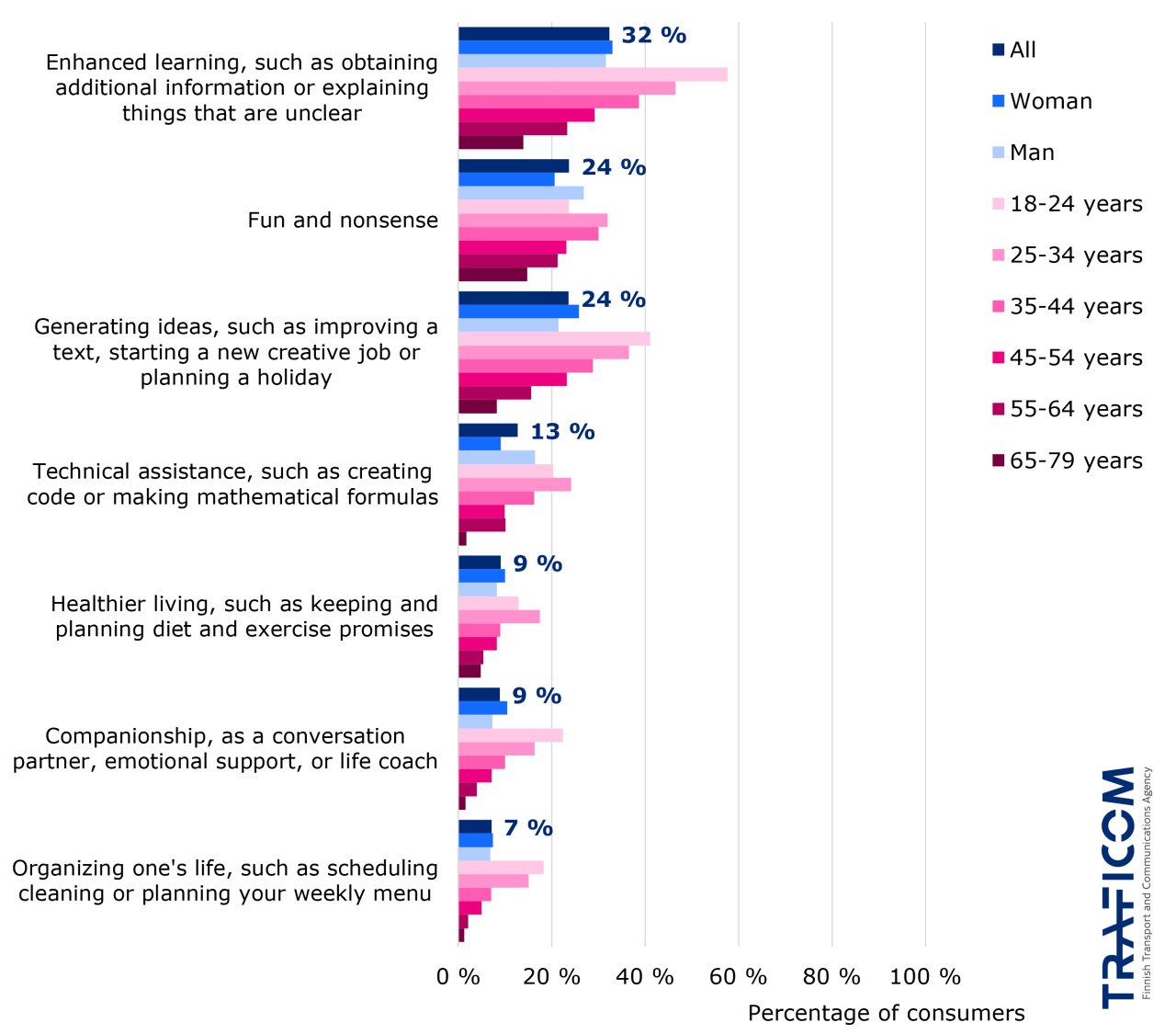
Figure 2. Proportions of consumers who have used AI for the purposes listed. AI is most commonly used to support learning, for example in information searches and clarifying complex or unclear topics.
Information is checked, but scepticism remains
Attention is paid to the accuracy of information produced by AI. Of those consumers who use AI at work or in their studies, 77 per cent verify the information they receive against another source.
Although 81 per cent of users find AI easy to use, 36 per cent consider the results it produces to be unreliable. The outputs are often perceived as clear, but their underlying basis is not fully trusted.
Attitudes are divided between benefits and concerns
Consumers’ attitudes towards AI are mixed. The most common associations relate to doubts and risks, but also to benefits and opportunities. In the consumer survey, respondents described their views on AI using two words. Among individual words, both positive terms such as 'useful' and negative ones such as 'frightening' were emphasised.
“AI simultaneously raises interest and scepticism. Consumers recognise its benefits but remain cautious about how reliable the information it produces is,” says Senior Specialist Marja Heinonen.
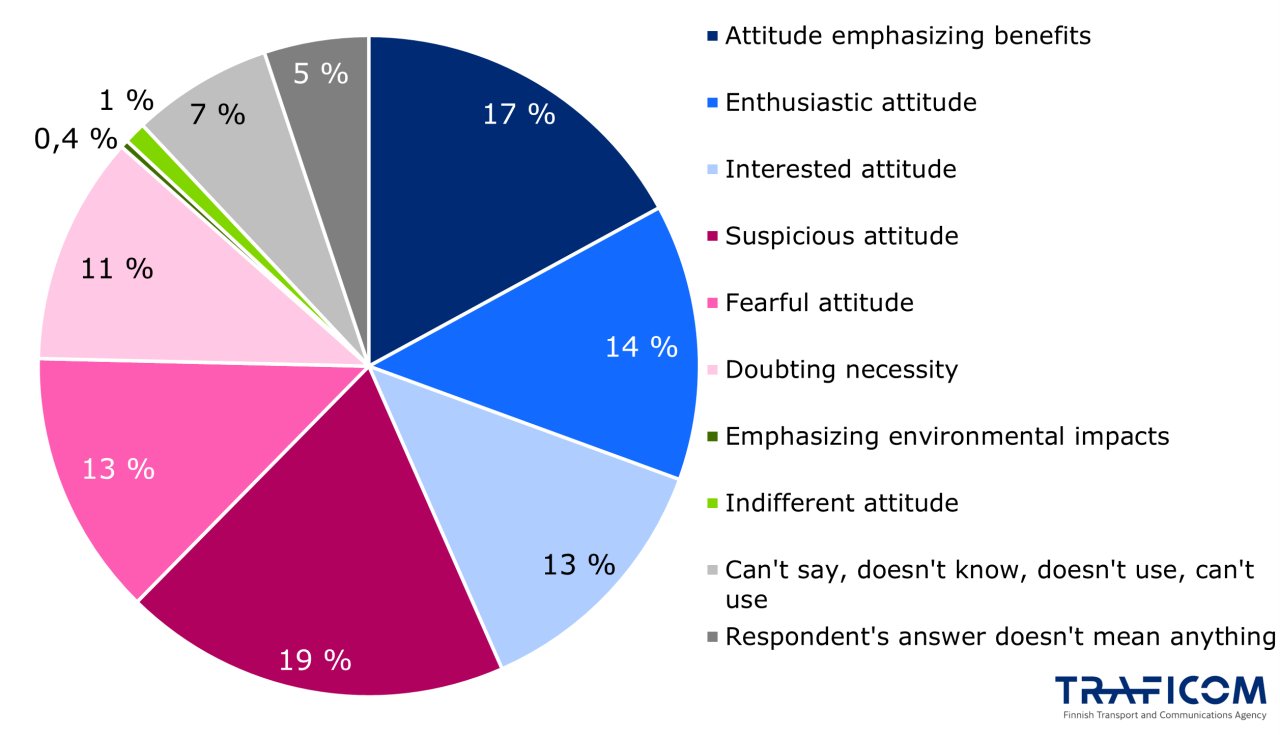
Figure 3. Distribution of classified word pairs describing consumers’ perceptions of AI. A total of 19% of consumers provided a word reflecting a sceptical view of AI, while 17% provided a word emphasising its usefulness.
Awareness of data use varies
Two thirds of consumers are aware that AI applications may store the information provided to them and use it to develop their services. Awareness is more common among younger age groups than older ones.
Traficom emphasises that it is important for consumers to understand how AI services operate and the risks associated with them, so that these services can be used safely.
The study is based on a large-scale survey
The study was conducted by Bilendi Oy as an online survey among 3,000 respondents in late 2025. The results reflect Finnish consumers’ experiences and views on the use of AI.
Enquiries and further information
Results of the consumer survey in table format Ulkoinen verkkopalvelu.
Statistics Finland (2025): The share of consumers using generative AI has risen to 41 per cent Ulkoinen verkkopalvelu. (in Finnish)
Statistics Finland: Use of information and communications technology by individuals Ulkoinen verkkopalvelu.
Harvard Business Review (2025): How People Are Really Using Gen AI in 2025 Ulkoinen verkkopalvelu. and the infograf of the artickle Ulkoinen verkkopalvelu.
Marja Heinonen, Senior Specialist, tel. +358 29 534 7355, Contact form for statistical data services Ulkoinen verkkopalvelu., marja.heinonen@traficom.fi