
Interface Practices | Traficom
Transport and Communications Agency

Interface Practices

Under the Act on Transport Services, service providers must open the interfaces of essential data, single ticket and acting on somebody else’s behalf. The Act promotes cooperation between service providers and practices related to open interfaces.

The interface practices are non-binding recommendations

The purpose of Interface practices is, in cooperation with actors in the sector, to share best contractual practices on the opening of interfaces and on agreeing on their use.

These best practices are not legally binding regulations or instructions issued by Traficom, or legally binding interpretations of existing legislation. The interface practices are non-binding recommendations.

The decisions made by Traficom in interface-related supervisory matters are only binding on the parties in the cases concerned. The decisions made by Traficom as part of its supervisory task and the instructions issued by the agency in its capacity as an authority can be viewed on the agency’s website at www.traficom.fi.
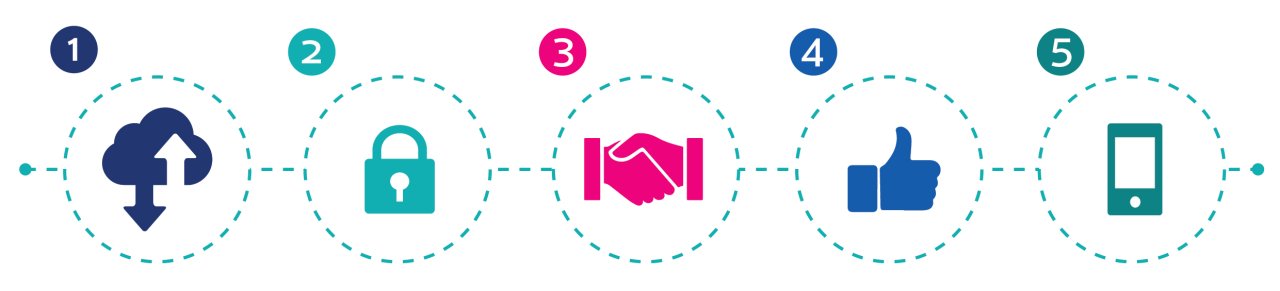
uvassa kuvataan rajapinnan käytöstä sopimisen viisi päävaihetta ikonein.

The five stages of agreeing on interface use: 1. Interfaces to be opened, 2. Reliability of the parties, 3. Negotiations, 4. Starting to use the interface, and 5. Using the interface

1. Interfaces to be opened

Under the Act on Transport Services, service providers must open the interfaces of essential data, single ticket and acting on somebody else’s behalf. The act also obliges service providers to cooperate in the opening of the interfaces.

There are three mandatory interfaces:

  • essential data
  • single ticket
  • acting on somebody else’s behalf
 Essential DataSingle TicketActing on Somebody Else's Behalf
The obligation applies to the following modes of transport:All modes of transportRoad and trail transportAll modes of transport
The opening of interfaces applies to the following parties:

Providers of mobility services

- providers of passenger and goods transport services (such as taxis)

- providers of transport services (such as vehicle rental companies)

- providers of brokering and dispatch services (such as taxi dispatch centres)

- information, parking and support services


Providers of passenger and goods transport services and brokering and dispatch services

- providers of passenger and goods transport services (such as taxis, buses and coaches)

- providers of brokering and dispatch services (such as taxi dispatch centres)

- or actors responsible for ticket and payment systems on behalf of the above parties


Providers of mobility services and integrated mobility services

that have user or customer accounts

- providers of passenger and goods transport services (such as taxis) - providers of transport services (such as vehicle rental companies)


- providers of brokering and dispatch services (such as taxi dispatch centres)

- information, parking and support services

- providers of integrated mobility services (such as MaaS service)

- or actors responsible for ticket and payment systems on behalf of the above parties

Parties entitled to access the interface:The data must be freely availableProviders of mobility services and integrated mobility services
 
Providers of mobility services and integrated mobility services

Read more:

Content of the obligations

2. Reliability of the parties

The party obliged to open the interface must conclude an agreement with the party using the interface.

What can parties require of each other in terms of reliability and what law-based requirements can be placed concerning such issues as information security and identification solutions?

Ensuring information security

  • The party opening the interface must ensure that the opening does not endanger the information security of the service or privacy protection.
  • At the same time, the party provided access to the interface of acting on somebody else’s behalf must ensure adequate data protection and information security for its own service.

Identifying the user in acting on somebody else’s behalf

  • The contracting parties in acting on someone else’s behalf must assess, on the basis of the need to protect the personal data processed and the need to maintain the reliability of the user account, whether identification and linking of the user accounts will suffice or whether there is a need to verify the identity of the user.
  • The contracting parties must agree which procedures they will use to identify the users, to verify their identity and to link the authorisations given by the users to the user accounts.

Read more:

  • The key principle is that no personal data should be unnecessarily processed. This also applies to the identification of users.
Details of user accounts

3. Negotiations

Opening and using the interface require an agreement between the parties concluded on the basis of mutual negotiations.

4. Starting to use the interface

Before the interface can be put into use, the parties must agree on its technical implementation and on the data to be transmitted.

Data to be transmitted:

  • Contracting parties should agree on the technical implementation of interfaces and the data to be transmitted so that the data is sufficient for reserving the ticket products required by the customers and that the ticket products sent to the passengers can be properly authenticated before and during the journey.
  • The parties must take data protection provisions into account when agreeing on the data to be transmitted.

5. Using the interface

The interface can be activated after the parties have concluded the agreement on its use. Using the interface involves a range of different responsibility issues and there may also be changes in the interface during its use.

The parties should agree on their mutual responsibilities because there are no specific provisions on the legal protection of passengers using travel chains. Legislation on the rights of passengers is fragmented and case-specific.

The parties cannot agree on the rights of users laid down in the Consumer Protection Act and in special legislation on individual modes of transport in a manner that weakens the position of passengers.

The parties should at least agree on the following responsibilities:

  • clear understanding of the roles of the contracting parties and services
  • shared practices regarding incidents in the travel chain
  • customer complaints and compensation
  • quality of the travel chains
  • accessibility of the travel chains

Read more:

Responsibilities towards service users
Page was last updated